
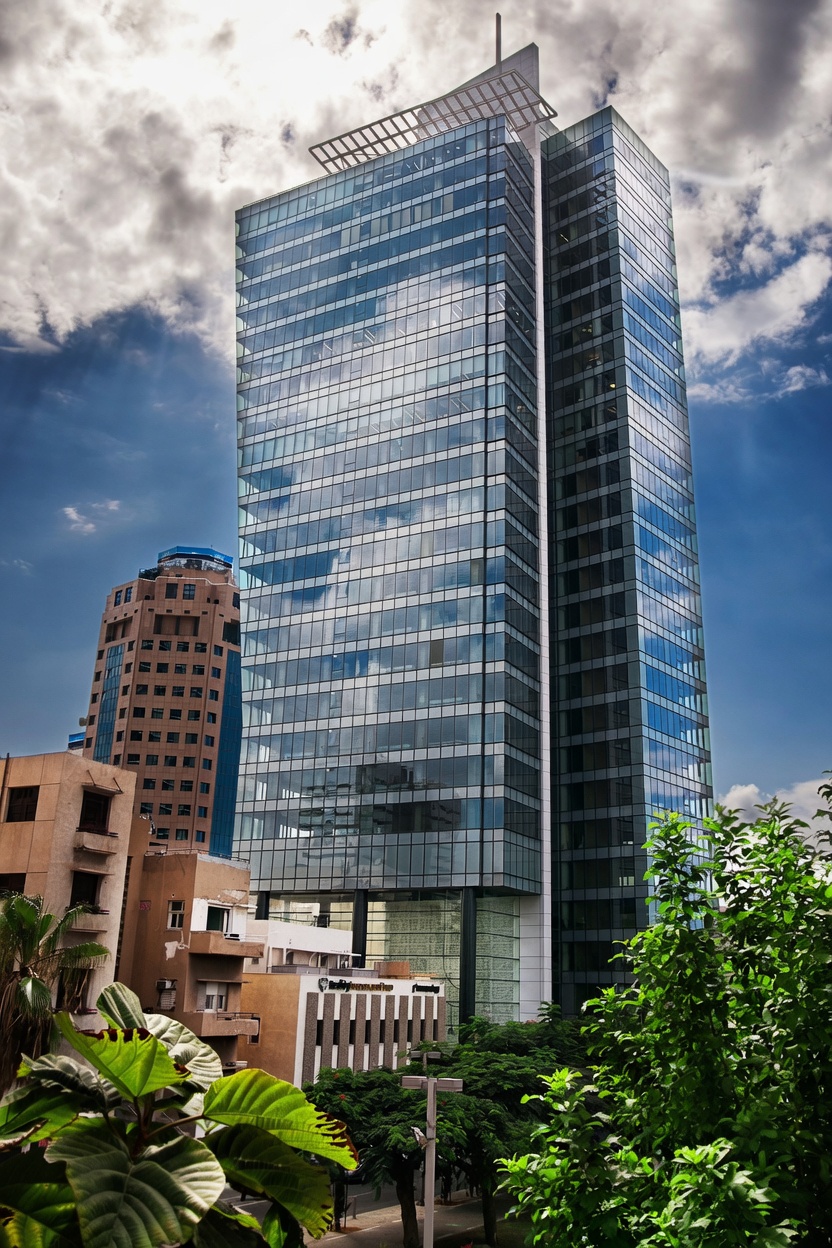
A contemporary residence among the protected Bauhaus. The address where the White City begins, quietly.
Rothschild Boulevard
To build a new residential tower inside the UNESCO-protected White City is, in theory, difficult. The protection is serious. The height restrictions are serious. The obligation to maintain a dialogue with the 1930s buildings on either side is serious. Rothschild 22 accepted each of these constraints and produced, within them, a small luxury development that has become something of a reference for how contemporary Tel Aviv architecture can sit alongside its protected inheritance without embarrassing either.
The building is restrained by design. The facade maintains a disciplined proportion with its neighbours. The height is considered rather than maximised. The unit count is deliberately small — fewer than thirty residences across the whole building, a figure that places Rothschild 22 firmly in the boutique category even by the narrow standards of this stretch of the boulevard.
On the boulevard
The immediate context is the densest concentration of restored Bauhaus architecture on Rothschild.
A resident stepping out of the building walks past the work that earned the city its UNESCO listing — the 1930s apartment blocks, the rounded corners, the horizontal balconies, the pale rendered facades that give the White City its name. The Rothschild-Allenby intersection is two minutes north. The Carmel Market and Nachlat Binyamin craft quarter are a seven-minute walk south. The boulevard’s full programme of cafes and restaurants is immediately at the doorstep.
This is Rothschild at its most characterful. The neighbourhood amenity belongs to the building in a way it cannot for the newer developments at either end of the boulevard.
On the buyer
Rothschild 22 attracts a buyer who values context over scale.
The resident profile is weighted more heavily toward cultural professionals than toward financial ones — architects, gallery principals, senior editors, academic figures, the occasional established novelist. Many of the owners arrived at the building after an explicit search for a contemporary residence that did not overpower its surroundings. The absence of a swimming pool at the building — an unusual omission in this pricing category — has, in our experience, acted as a quiet filter rather than a drawback. The buyers who care about a pool go elsewhere. The buyers who remain are usually the ones the building was designed for.
The international share of residents is lower here than at Rothschild 17 or Rothschild No. 1. Primary residence usage is the norm rather than the exception.
On representation
Residences at Rothschild 22 transact slowly and through quiet channels.
The small unit count, the stable resident community, and the design-led buyer profile combine to produce a building that rarely delivers public inventory. When residences do appear they are often directed first to a short list of buyers known to the handful of offices that follow the building closely. We are on that list, and have made introductions at Rothschild 22 more than once — including, on occasion, between residents of the building itself.
A contemporary address, inside the protected city. Fewer units than most buildings, and fewer buyers who understand the distinction.
A note from the office. If you are considering a residence at Rothschild 22 — as a buyer, as an owner, or simply as a matter under quiet consideration — a brief conversation is the simplest place to begin.
→ Request a conversation
By appointment. By introduction. By conversation.


