
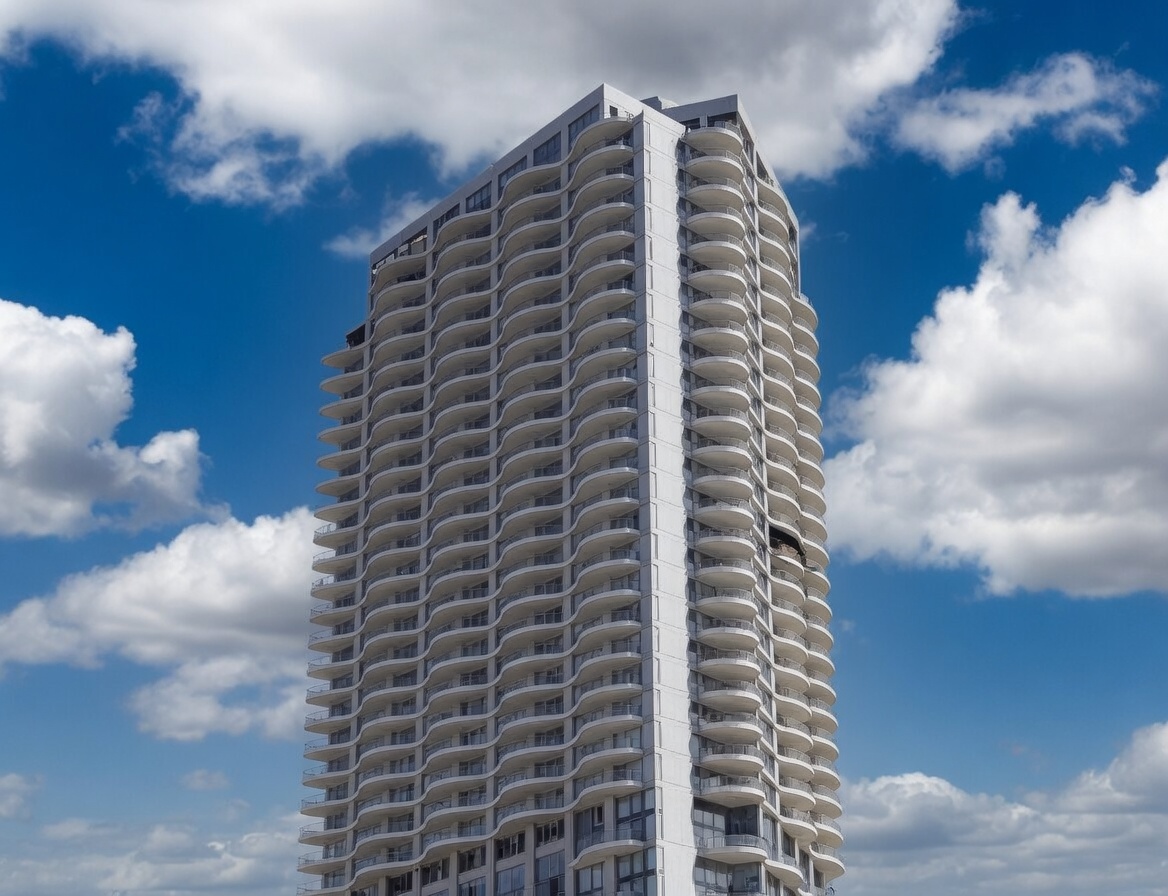
The only high-rise in the protected quarter. The view that cannot be taken away.
Neve Tzedek
Tel Aviv’s oldest neighbourhood was founded in 1887 — a decade before the city itself, and the first Jewish settlement established outside the walls of Jaffa. Its street grid, its building scale, and its architectural character exist nowhere else in the country. The restored single-storey cottages, the narrow lanes that cannot accommodate cars, the courtyards closed to the public street — Neve Tzedek is, more than anywhere else in Tel Aviv, a neighbourhood that has kept its original conception intact.
Into this quarter, at its southern edge, someone built a tower.
The Neve Tzedek Tower is, by any fair measure, an architectural anomaly. It is the only true high-rise within the protected boundaries of the neighbourhood, and — given the protections in place — almost certainly the only one that will ever be built there. Opinions on its presence remain divided. What is beyond argument is that the building, by virtue of its position, possesses a singular and permanent commercial advantage: the sea view from its upper floors cannot, under any plausible future development, be taken away.
On the quarter
Neve Tzedek is the closest thing Tel Aviv offers to a European historic neighbourhood.
Shabazi Street, the quarter’s principal axis, is lined with boutique retail, design galleries, and the city’s highest concentration of chef-led restaurants. The Suzanne Dellal Centre — Israel’s principal dance venue — anchors the cultural programming. The HaTachana complex, a restored railway station converted into a small commercial quarter, sits at the neighbourhood’s southern edge. The beach is eight minutes on foot; Rothschild, ten.
Residents of the tower live in Neve Tzedek, with all the quarter’s advantages, while looking down upon it. This is a proposition no other building in the neighbourhood can offer, and will not be able to offer for as long as the protection remains in place.
On the buyer
The Neve Tzedek Tower attracts a distinctive buyer — usually one who has spent time considering the neighbourhood and has decided, with some deliberation, to live above it rather than within its historic fabric.
The building’s international share is meaningful. Anglo olim, European families, and a particular subset of returning Israelis who value the quarter’s character but prefer the contemporary specification of a tower residence — these are the profiles we see most often. Design-literate buyers are disproportionately represented. A significant number of residents are architects, gallerists, or creative-industry principals.
The apartments themselves were designed with the view in mind. Most units face the Mediterranean or the neighbourhood’s restored fabric below, and the higher floors deliver a panorama that extends from Herzliya in the north to Bat Yam in the south, with Jaffa in the foreground.
On representation
Residences at the Neve Tzedek Tower transact at a deliberate pace.
Turnover is modest. A number of the original purchasers remain in the building. Resale inventory, when it appears, tends to reflect life-circumstance decisions rather than routine commercial sales — an estate settling, a family relocating abroad, a second-home owner consolidating residences.
We have shown the building extensively, and have come to understand the particular calculation the buyer is making: not a Neve Tzedek purchase in the conventional sense, but a sea view in perpetuity, delivered within the one neighbourhood of the city most likely to retain its character into the long future.
The only high-rise in the oldest quarter. And the view that cannot be taken, at any future date, by anyone.
A note from the office. If you are considering a residence at the Neve Tzedek Tower — as a buyer, as an owner, or simply as a matter under quiet consideration — a brief conversation is the simplest place to begin.
→ Request a conversation
By appointment. By introduction. By conversation.


